


Meta’s Hidden AI Image Labels: A Step Back for Transparency?
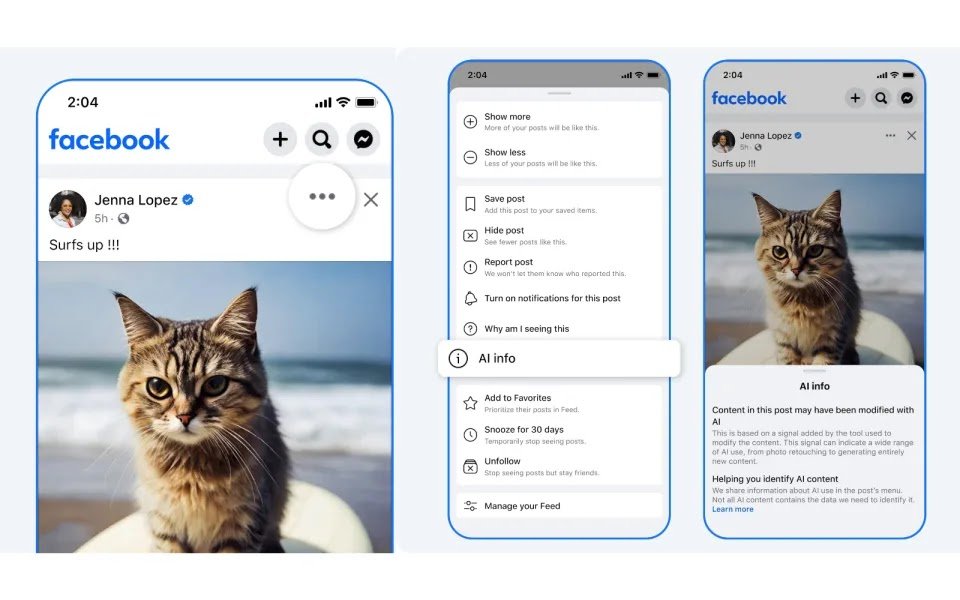
You have to go to the three dots menu of the post to see the AI Info of the image
 |
|
In a move that has raised
eyebrows among digital privacy advocates and fact-checkers alike, Meta, the
parent company of Facebook and Instagram, has announced a significant change to
its AI-edited image labeling policy. Starting next week, the platform will no
longer prominently display a label indicating that an image has been altered
using AI tools. Instead, users will have to dig through the post’s settings to
find this information, a process that many argue is far too cumbersome and
could hinder efforts to combat the spread of misinformation.
The
New Labeling Process
Prior
to this change, Meta would clearly label images that had been edited using AI
tools, making it easy for users to identify and assess the authenticity of the
content. However, the new policy will require users to tap on the three-dot
menu at the upper right corner of a Facebook post and then scroll down to find
the “AI Info” option. Only then will they see a note stating that the
image may have been modified with AI.
While
Meta claims that this change is intended to better reflect the extent of AI
usage in content, many critics argue that it is a step in the wrong direction.
In an era where AI-generated images are becoming increasingly sophisticated and
can be used to spread disinformation, it is essential to have clear and visible
labels to help users discern fact from fiction.
The
Risks of Hidden Labels
The
potential consequences of this policy change are significant. Doctored images
are being used to spread misinformation on a wide scale, particularly during
election seasons. By making it more difficult to identify AI-edited images,
Meta is inadvertently increasing the risk of false information being
disseminated and believed.
Moreover,
the new labeling process could have unintended consequences for content
creators. Photographers and other artists who use AI tools for creative
purposes may be concerned about the potential negative impact on their work. If
users are unable to easily identify AI-edited images, there may be a perception
that such content is less valuable or authentic.
Meta’s
decision to hide AI-edited image labels is a troubling development that raises
serious concerns about transparency and the spread of misinformation. While the
company may argue that its intentions are well-meaning, the practical
implications of this change could be far-reaching and damaging. It is
imperative that Meta reconsider this policy and take steps to ensure that users
have the information they need to make informed decisions about the content
they consume.