WhatsApp’s Latest Surprise: Messaging Across Apps Made Easy
WhatsApp’s Latest Surprise: Messaging Across Apps Made Easy
Meta Unveils Plans for Interoperable Messaging on WhatsApp and Messenger
 |
|
This significant development, initially slated for users in the European Union,
introduces a new era of interoperability in messaging apps.
Key Features and Timeline:
 |
| Image: Meta |
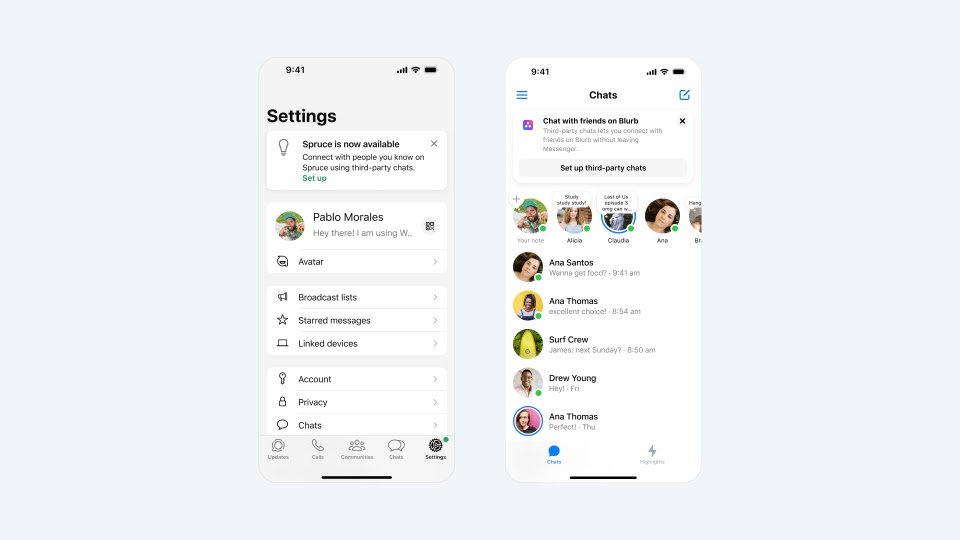
- Unified Inbox: Users will have the flexibility to consolidate Messenger and
WhatsApp messages with third-party chats into a single inbox or maintain
separate inboxes. - Enhanced Notifications: New notifications will alert users when they can link chats
from newly supported apps. - Rich Messaging Features: Meta promises a seamless experience with features like
reactions, direct replies, typing indicators, and read receipts. - Group Chats: The ability to create groups with users from third-party
chats will be introduced in 2025. - Video and Voice Calls: Meta plans to extend interoperability to video and voice
calls by 2027.
Compliance with EU Regulations:
As a “digital gatekeeper” under the
EU’s Digital Markets Act, Meta is obligated to ensure interoperability between
its messaging platforms and third-party apps. This initiative aligns with the
EU’s efforts to promote competition and consumer choice in the digital market.
Technical Challenges and Solutions:
While the integration of third-party chats
presents technical challenges, Meta has addressed them by:
- Adopting the Signal Protocol: Ensuring privacy and security by requiring third-party apps
to use the same protocol as WhatsApp and Messenger. - Making Signal Protocol Accessible: Providing the Signal Protocol to interested partners upon
request.
The Future of Messaging:
Meta’s announcement marks a
significant step towards a more interconnected and unified messaging ecosystem.
By breaking down barriers between different platforms, users can enjoy a more
seamless and convenient communication experience. As Meta continues to refine
and expand its interoperability features, we can anticipate a future where
messaging is truly borderless.